
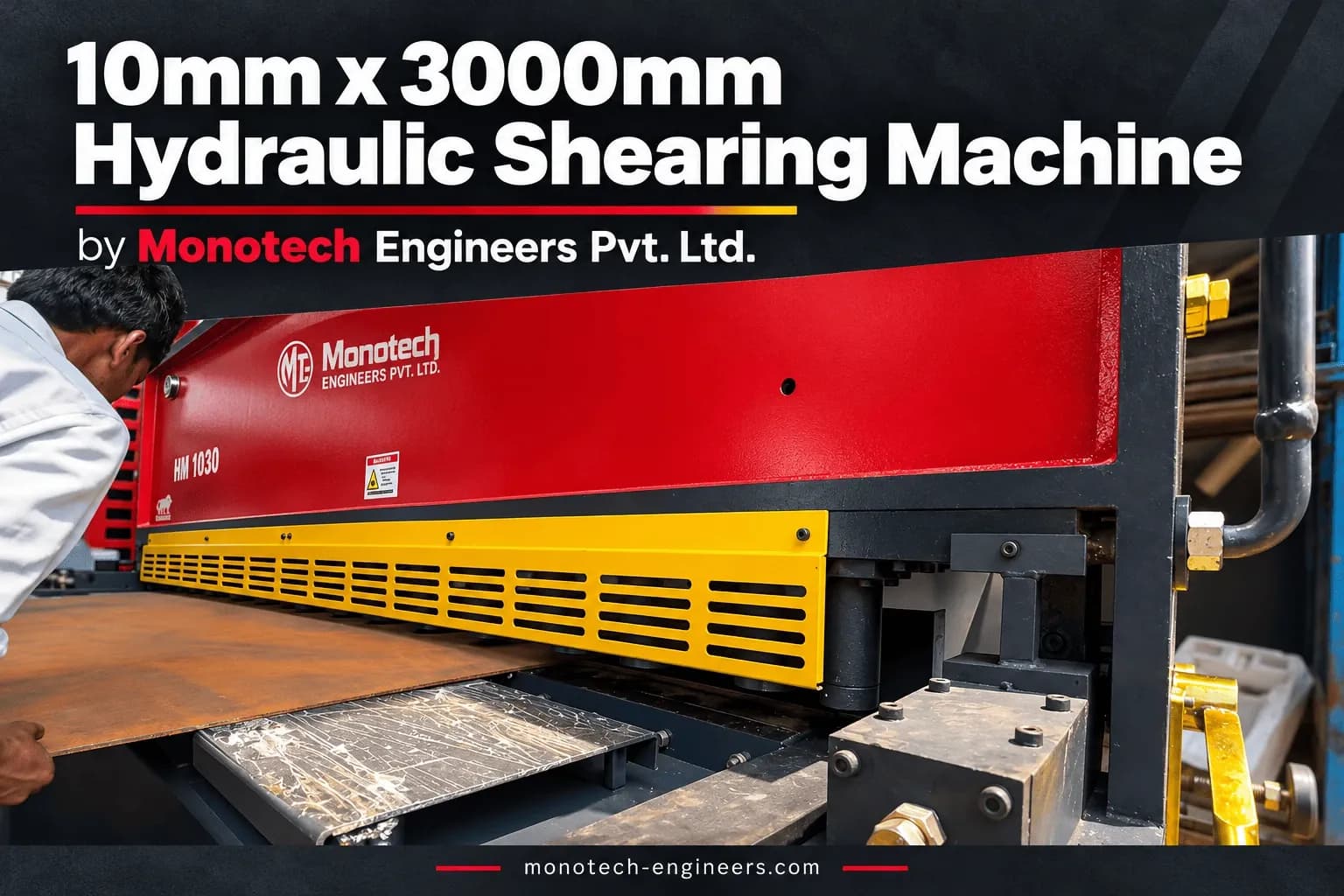
10mm x 3000mm Hydraulic Shearing Machine by Monotech
A 10mm x 3000mm hydraulic shearing machine is an important investment for fabrication businesses that need straight cuts in metal sheets. From preparing blanks for bending to sizing panels for welding, shearing supports several stages of industrial production. Choosing the right machine helps businesses match cutting capability with their materials, component dimensions, and daily workload.
Monotech Engineers Pvt. Ltd., established in 1991, manufactures sheet metal machinery for industrial applications. For buyers considering a hydraulic shearing machine, understanding capacity ratings, operating features, and maintenance requirements is essential. This guide explains what to evaluate before selecting a machine for your fabrication needs.
What Is a 10mm x 3000mm Hydraulic Shearing Machine?
A hydraulic shearing machine cuts metal sheets using a moving blade and a fixed blade. Hydraulic pressure drives the cutting mechanism, while the sheet is supported and held in position during the operation.
The designation 10mm x 3000mm generally describes the machine’s rated cutting thickness and cutting length. However, the 10mm thickness rating applies to a specified material and strength. Buyers should confirm these conditions before assuming that the machine can process every metal at the same thickness.
For example, a mild steel capacity rating does not automatically apply to stainless steel. Material grade, tensile strength, and thickness all affect the cutting load.
How Does Hydraulic Sheet Metal Shearing Work?
The process begins with positioning the sheet on the machine’s support surface. The operator sets the required cutting dimension, checks the relevant adjustments, and aligns the material against the back gauge.
The hold-down system secures the sheet before the moving blade passes the fixed blade to complete the cut. Afterward, the operator inspects the component for dimensions, burr formation, and distortion.
Consistent results depend on correct settings and suitable material handling. Blade clearance, blade condition, and sheet positioning should be checked according to the manufacturer’s instructions. Trained operation is essential throughout the cutting cycle.
Key Features to Evaluate Before Buying
When comparing a 10mm x 3000mm hydraulic shearing machine, review the specifications of the exact model offered. Controls, adjustment methods, and accessories can vary between configurations.
Rated Cutting Capacity
Confirm the maximum permissible thickness for each material you intend to process. Share material grades and strength information with the manufacturer wherever available. This helps establish whether the proposed machine suits routine production and occasional heavier jobs.
Blade Clearance Adjustment
Blade clearance is the gap between the cutting blades. Appropriate clearance depends on material thickness and properties. Unsuitable settings can contribute to excessive burrs, poor edge quality, or unnecessary blade wear.
Ask how clearance is adjusted and which settings are recommended for your materials.
Back Gauge System
The back gauge helps position the sheet for the required cutting dimension. Check its travel range, adjustment method, and suitability for your component sizes.
Convenient positioning can help reduce setup effort when handling repeated cutting jobs.
Hold-Down System
The hold-down system secures the sheet during cutting. Its proper operation supports stable positioning and helps limit unwanted material movement. Review the arrangement supplied with the proposed machine.
Controls and Safety Features
Check the operating controls, emergency stops, guarding, and safety instructions included in the technical offer. Ask about operator training and the procedures required for safe loading, cutting, and maintenance.
Applications in Sheet Metal Fabrication
A hydraulic sheet metal shearing machine prepares straight-edged blanks for further manufacturing operations. It can support workshops producing machinery panels, industrial cabinets, enclosures, steel furniture, and general fabricated components.
Cut sheets may move to bending, punching, welding, or assembly, depending on the finished product. Matching blank dimensions to the next operation helps maintain an organised production process.
Suitability depends on material specifications and the required finish. Shearing is intended for straight cuts; components needing complex contours, internal openings, or shaped profiles require other cutting processes.
What Affects Cutting Quality?
Several factors influence the results achieved with a 10mm x 3000mm hydraulic shearing machine. Material properties are a starting point: different grades respond differently during cutting.
Blade condition also matters. Worn or damaged blades can affect edge quality and increase burr formation. Blade clearance must suit the material, while accurate back gauge settings help maintain the intended component dimensions.
Sheet support and hold-down operation influence stability during the stroke. Poor positioning can lead to variation between components.
Before purchasing, request sample cuts using your intended material. Discuss acceptable dimensional tolerances, edge condition, and distortion with the manufacturer so expectations are clear.
How to Choose the Right Hydraulic Shearing Machine
Begin with your actual production requirements. List the materials you cut, their maximum thicknesses, and the largest sheet dimensions handled in your workshop.
Next, consider component sizes, batch quantities, and required accuracy. A machine suitable for occasional cutting may need a different configuration from one intended for frequent changes between production jobs.
Evaluate sheet loading and unloading arrangements as well. Heavy or large sheets require suitable handling equipment and sufficient working space.
Finally, review installation requirements, electrical supply, operator training, spare parts availability, and service support. Request these details in writing to make quotations easier to assess.
Maintenance for Reliable Operation
Regular maintenance supports consistent machine operation and helps identify wear before it disrupts production. Follow the maintenance schedule supplied by the manufacturer.
Routine inspections may include checking hydraulic oil levels, looking for leaks, inspecting blades, and cleaning support surfaces. Back gauge components and hold-down mechanisms should also be examined as instructed.
Use the specified lubricants and replacement parts. Check safety devices according to the machine manual, and report unusual noise, vibration, or operating behaviour promptly.
Maintenance work should be completed by trained personnel using the prescribed shutdown and isolation procedures. Keep service records to track inspections and repairs.
Discuss Your Requirements with Monotech Engineers
Monotech Engineers Pvt. Ltd. has manufactured sheet metal machinery since 1991. When enquiring about a 10mm x 3000mm hydraulic shearing machine, provide a clear description of your materials, sheet sizes, and production targets.
Request a technical quotation covering capacity conditions, back gauge specifications, controls, included accessories, and installation requirements. Confirm available training and service support before placing an order.
Visit Monotech Engineers Pvt. Ltd. to discuss a hydraulic shearing machine suited to your fabrication requirements.
Frequently Asked Questions
What does 10mm x 3000mm mean?
It generally refers to a rated cutting thickness of 10mm and a cutting length of 3000mm. The thickness capacity applies under specified material conditions. Confirm the relevant grade and strength with the manufacturer.
Can this machine cut stainless steel?
Stainless steel cutting capacity must be confirmed separately. A 10mm mild steel rating does not establish a 10mm stainless steel capacity. Provide your exact grade and thickness when requesting technical advice.
Why is blade clearance important?
Blade clearance influences how the material separates during cutting. An appropriate setting helps control edge quality and burr formation. Follow the manufacturer’s recommended settings for each material and thickness.
What is the purpose of a back gauge?
A back gauge helps position the sheet to achieve the required cutting dimension. Correct adjustment supports consistency across repeated components and reduces the need to measure sheet placement for every cut.
How can I request a quotation from Monotech?
Share your material grade, maximum thickness, sheet dimensions, required cutting accuracy, and expected production volume. These details help Monotech evaluate your application and propose a suitable machine configuration.